

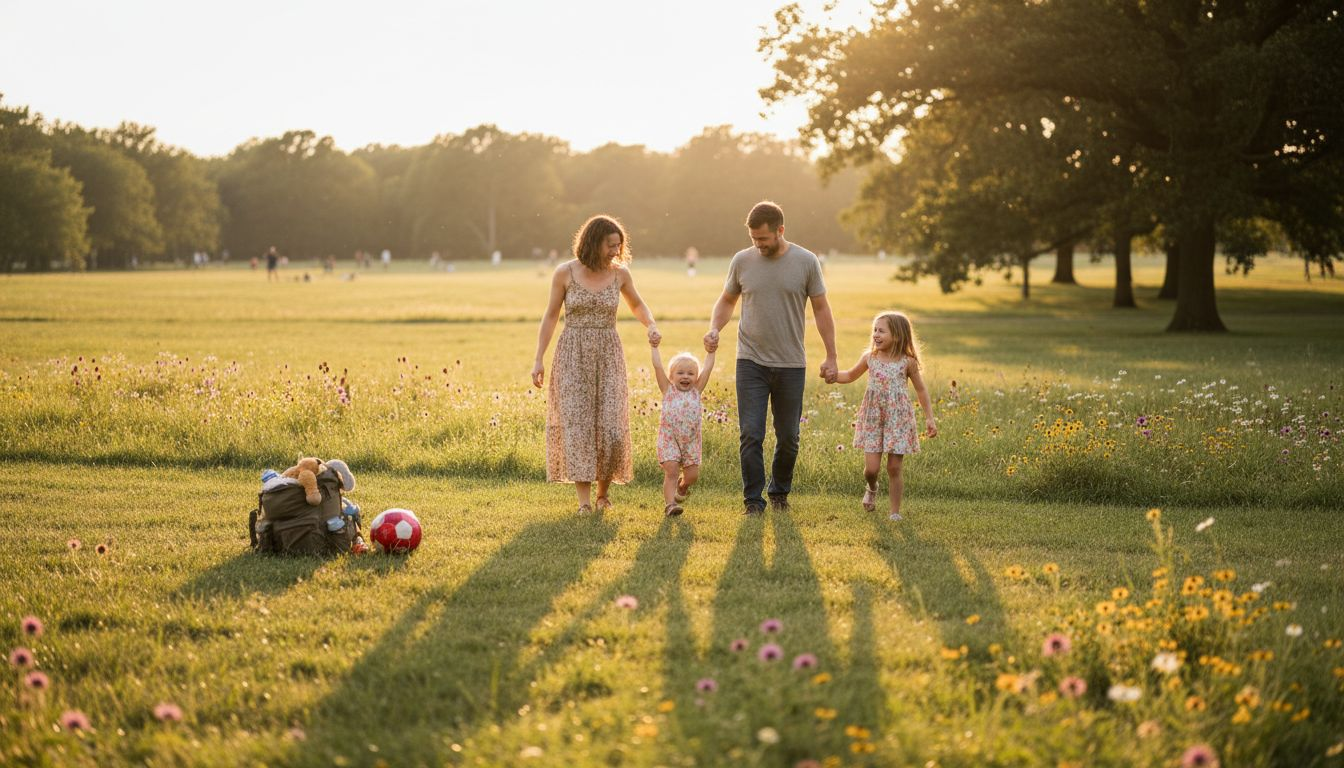
Over 80% of American parents say they wish their family photos looked more natural and radiant. If you are raising young children in Massachusetts, Connecticut, or Rhode Island, you might wonder how to capture those genuine moments without studio glare. Learning about golden hour can help families take beautiful outdoor portraits in soft, flattering light. This guide breaks down myths and reveals practical tips for using New England’s magical sunlight so every family memory shines.
Table of Contents
- Defining Golden Hour And Common Myths
- Unique Light Qualities During Golden Hour
- How Golden Hour Enhances Family Photography
- Timing Golden Hour In New England
- Common Golden Hour Photography Mistakes
Key Takeaways
| Point | Details |
|---|---|
| Golden Hour Timing | The duration and timing of golden hour varies significantly across different geographic locations and seasons, making it essential for photographers to plan accordingly. |
| Unique Light Qualities | Golden hour light provides soft, warm tones and long shadows that enhance textures and create a flattering atmosphere for photography. |
| Family Portrait Benefits | The forgiving nature of golden hour light allows for emotional storytelling in family photography, reducing unflattering shadows and enhancing expressions. |
| Common Mistakes | Photographers should avoid arriving late and prepare camera settings in advance to fully capture the fleeting moments of golden hour light. |
Defining Golden Hour and Common Myths
The golden hour represents a magical window of photographic opportunity that occurs just after sunrise and before sunset, when sunlight transforms from harsh and direct to soft and warm. Understanding golden hour photography) reveals why photographers consider this period so extraordinarily special for capturing breathtaking images.
During this brief timeframe, typically lasting between 20 to 75 minutes, natural light becomes dramatically different from midday conditions. Sunlight travels through more atmospheric layers, creating a warm color temperature around 3,500 K that bathes scenes in gentle, diffused illumination. This soft light produces long, dramatic shadows and shifts color palettes toward rich amber and rose tones, making subjects appear more dimensional and aesthetically pleasing.
Common myths about golden hour persist among amateur photographers. Many incorrectly assume this magical lighting period happens at exactly the same time everywhere or lasts precisely one hour. In reality, golden hour’s duration varies significantly based on latitude and seasonal changes. Photographers in Massachusetts might experience a shorter golden hour compared to those near the equator, with timing and duration fluctuating throughout the year.
Pro tip: Download a mobile photography app that calculates precise golden hour times for your specific geographic location to maximize your shooting opportunities.
Unique Light Qualities During Golden Hour
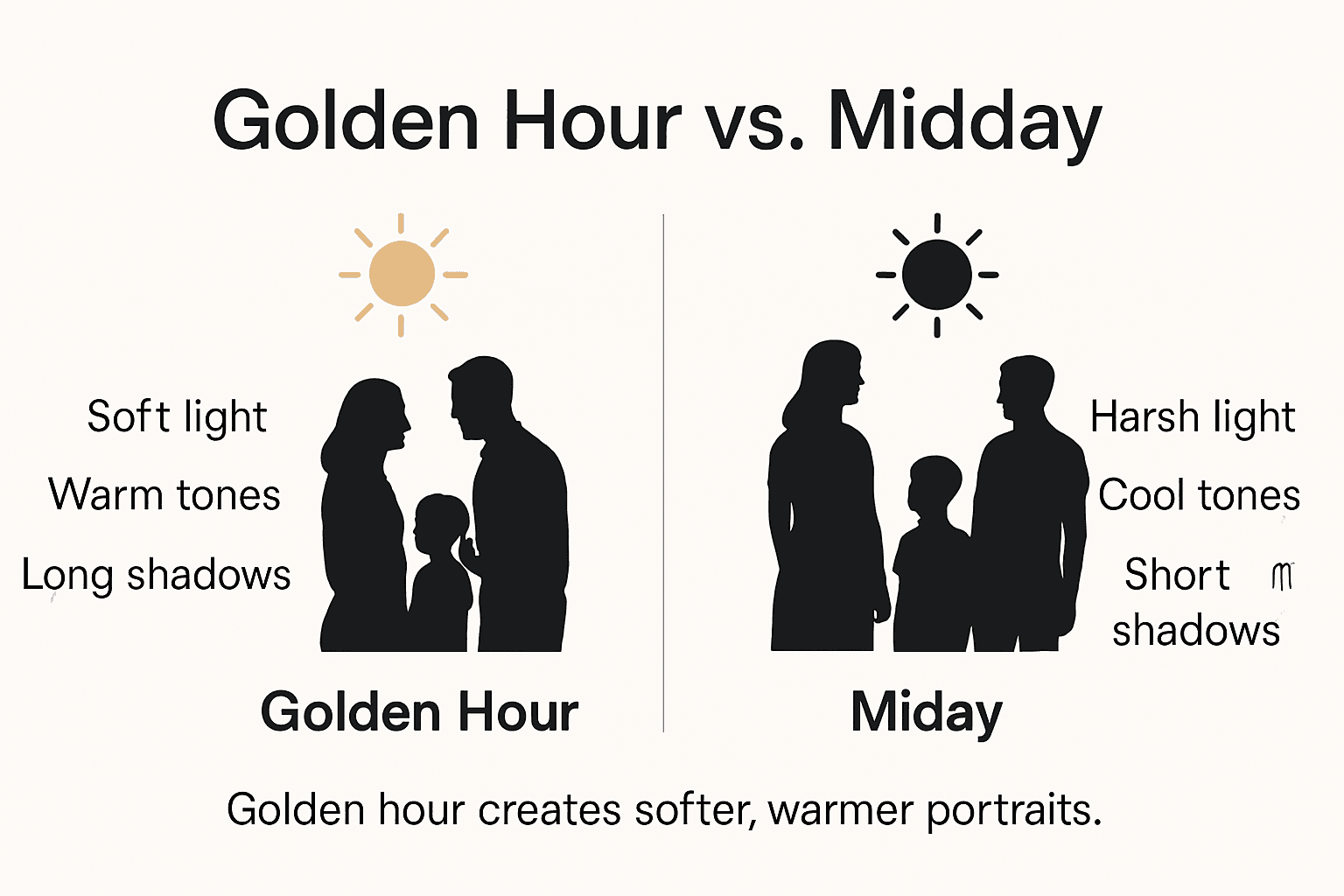
The golden hour creates a transformative photographic environment where light behaves with extraordinary softness and warmth. Unlike harsh midday sunlight, this magical period produces a diffused golden hue that gently caresses subjects, creating an almost ethereal quality that can turn ordinary scenes into extraordinary visual narratives.
During this time, the sun’s low angle generates long, graceful shadows that add remarkable depth and dimension to photographs. These elongated shadows sculpt subjects with nuanced highlights and gentle gradients, revealing textures and contours in ways impossible during standard lighting conditions. Photographers appreciate how this directional lighting accentuates subtle details while maintaining a soft, flattering illumination that seems to wrap around subjects like a delicate, warm blanket.

The color palette during golden hour is particularly enchanting. Warm amber and rose tones infuse images with an intimate, nostalgic quality that resonates deeply with viewers. Skin tones appear more luminous, landscapes gain rich dimensionality, and even mundane objects are transformed by this magical light. The natural diffusion of sunlight creates a visually appealing softness that professional photographers actively seek to elevate their visual storytelling.
Pro tip: Position your subjects with their sides angled toward the sun to maximize shadow depth and create more dynamic, sculptural lighting effects during golden hour.
Here is a comparison of golden hour light qualities versus midday light:
| Aspect | Golden Hour Light | Midday Light |
|---|---|---|
| Shadow Length | Long, dramatic | Short, minimized |
| Color Temperature | Warm, amber/rose (~3,500 K) | Cool, blue-white (~5,600 K) |
| Light Direction | Low angle, directional | Overhead, harsh |
| Portrait Appearance | Soft, flattering | Harsh, unflattering |
| Texture Visibility | Enhanced depth and contour | Flat, minimal detail |
How Golden Hour Enhances Family Photography
Family photography transforms during golden hour, offering photographers a magical window for capturing profoundly emotional and visually stunning images. The sun’s low angle creates a forgiving light that flatters every family member, softening skin tones and reducing unflattering shadows that typically plague midday portraits.
This extraordinary lighting environment allows for genuine emotional storytelling. Children’s spontaneous movements and interactions become beautifully illuminated, with warm golden tones highlighting their natural expressions and playful energy. The gentle, diffused light minimizes squinting and harsh facial shadows, making it easier to capture authentic moments without technical lighting challenges that often frustrate family photographers.
The cinematic quality of golden hour light adds a timeless dimension to family portraits. Warm amber and rose hues create a nostalgic atmosphere that transforms ordinary interactions into deeply meaningful visual narratives. Whether capturing a parent’s tender embrace, siblings’ playful moments, or grandparents’ gentle smiles, this magical lighting elevates family photographs from simple documentation to emotional artwork that families will treasure for generations.
Pro tip: Position family members with side lighting during golden hour to create natural depth and sculpt faces with soft, flattering illumination.
Timing Golden Hour in New England
Capturing the perfect golden hour in New England requires understanding the region’s unique seasonal variations and precise timing dynamics specific to local latitude. Photographers must recognize that golden hour is not a fixed, uniform timeframe, but a dynamic window that shifts dramatically throughout the year.
Morning golden hour in Massachusetts, Connecticut, and Rhode Island typically ranges between 7:00 AM and 8:30 AM during winter months, with earlier start times in summer. Evening golden hour presents an equally nuanced timeline, beginning approximately 30 minutes before sunset and lasting anywhere from 20 to 60 minutes. These windows vary significantly depending on specific geographic coordinates, with coastal areas experiencing slightly different light conditions compared to inland locations.
New England’s distinct seasonal changes make golden hour timing particularly complex. Photographers can leverage digital tools and calculators to determine precise golden hour start and end times based on specific dates and locations. Understanding that golden hour occurs when the sun sits between -4° and +6° elevation helps photographers plan meticulously, ensuring they capture those magical moments of soft, warm illumination that make New England family photography truly extraordinary.
Pro tip: Download a location-specific golden hour mobile app to get exact timing predictions for your precise shooting location in New England.
Common Golden Hour Photography Mistakes
Photographers often sabotage their golden hour sessions by making critical errors that undermine their potential for stunning imagery. Arriving late, failing to scout locations in advance, and not understanding the nuanced light conditions can transform what could be a magical photographic experience into a frustrating missed opportunity.
One of the most prevalent mistakes is rushing through the golden hour without proper preparation. Photographers frequently neglect to adjust camera settings quickly enough to capture the rapidly changing light, resulting in inconsistent exposures and missed moments. Some photographers fail to experiment with backlighting techniques, missing the chance to create dramatic rim lighting or compelling silhouettes that make golden hour photography truly unique.
Successful golden hour photography requires patience and strategic planning. This means coordinating family outfits that complement warm lighting, selecting locations with optimal light angles, and understanding how different landscapes interact with golden hour’s soft, directional illumination. New England photographers must be especially mindful of the region’s specific light dynamics, which can change dramatically between coastal and inland settings.
Pro tip: Practice adjusting your camera settings before the golden hour begins, and bring a light meter to help you quickly adapt to the changing light conditions.
Here is a summary table for common golden hour photography mistakes and how to avoid them:
| Mistake | Impact on Photos | Prevention Strategy |
|---|---|---|
| Arriving late | Missed best lighting | Arrive 15-30 minutes early |
| Poor location scouting | Limited creative options | Scout site in advance |
| Slow camera setting adjustments | Missed fleeting moments | Pre-set camera exposure |
| Ignoring changing light | Inconsistent exposure/color | Monitor sun position and adjust |
| Not experimenting with angles | Flat or uninspired images | Try side, back, and rim lighting angles |
Capture Your Family’s Golden Hour Moments with Jodi Blodgett Photography
Golden hour offers soft, warm, and flattering light that turns ordinary family photos into timeless treasures. However, mastering this magical window requires expert timing, careful planning, and an understanding of natural light—challenges that many families in Massachusetts, Connecticut, and Rhode Island face when trying to document their most meaningful moments.

At Jodi Blodgett Photography, Jodi specializes in harnessing golden hour’s unique qualities to create vibrant, emotional family portraits that truly shine. With deep knowledge of New England’s seasonal light rhythms and a passion for natural storytelling, she ensures your session maximizes this fleeting light for stunning results. Discover how you can experience the warmth and depth golden hour provides by exploring our family photography services and viewing heartfelt moments captured in our portfolio. Don’t miss the chance to preserve your family’s connections in the perfect light. Contact us today and let’s plan your unforgettable golden hour session.
Frequently Asked Questions
What is golden hour in photography?
Golden hour is the period shortly after sunrise and before sunset when the natural light is soft, warm, and diffused, creating ideal conditions for stunning photographs.
Why is golden hour important for family photography?
Golden hour provides flattering light that enhances skin tones, minimizes harsh shadows, and adds a nostalgic ambiance to family portraits, resulting in more emotional and visually appealing images.
How long does golden hour last?
The duration of golden hour varies based on geographic location and season, typically lasting between 20 to 75 minutes depending on the sun’s position in the sky.
What are common mistakes to avoid when shooting during golden hour?
Common mistakes include arriving late, poor location scouting, slow adjustments to camera settings, and failing to experiment with different angles, which can lead to missed opportunities for capturing the best light.