


Over 60 percent of American consumers say visuals are more memorable than text when deciding where to spend their money. Small businesses cannot afford to overlook the power of photography as it shapes how customers perceive and connect with their brand. Learning what sets effective small business marketing photos apart will help you attract attention, build trust, and create a lasting impression that goes beyond basic product snapshots.
Table of Contents
- Defining Small Business Marketing Photos
- Essential Photo Types for Branding
- How Professional Photography Elevates Business
- DIY Vs. Hiring A Photographer: Key Differences
- Legal Rights And Photo Usage For Businesses
Key Takeaways
| Point | Details |
|---|---|
| Importance of Professional Imagery | High-quality marketing photos enhance brand perception and build trust with potential customers. |
| Diverse Photo Types for Branding | Employ various photo types, such as team portraits and product images, to convey a comprehensive brand narrative. |
| Legal Considerations | Secure proper permissions and understand copyright laws to protect your visual content from legal issues. |
| Investment in Quality | Prioritize professional photography as a strategic investment to distinguish your business in competitive markets. |
Defining Small Business Marketing Photos
Small business marketing photos represent strategic visual content designed to communicate a company’s brand identity, services, and unique value proposition through professional imagery. These specialized photographs go beyond simple product snapshots, serving as powerful communication tools that help businesses connect with their target audience on an emotional and professional level.
Photography plays a critical role in modern marketing strategies, with various types of commercial photography enabling businesses to showcase their offerings effectively. Marketing photos can include headshots of team members, product images, workspace scenes, behind-the-scenes shots, and branded visual narratives that tell a compelling story about the business. Each image serves a specific purpose: building trust, demonstrating professionalism, and creating visual interest that attracts potential customers.
The most impactful small business marketing photos share several key characteristics. They are authentic, high-quality, contextually relevant, and aligned with the brand’s overall visual identity. Professional photographers understand how to craft images that not only look aesthetically pleasing but also communicate the business’s core values and personality. By selecting the right composition, lighting, and subjects, these photos transform from simple images into powerful marketing assets that can significantly enhance a company’s local visibility and audience engagement.
Pro Tip: Plan Your Visual Strategy: Before scheduling a photoshoot, create a detailed shot list that covers essential business perspectives, including team interactions, workspace environment, product highlights, and candid moments that showcase your company’s unique culture and spirit.
Essential Photo Types for Branding
Small businesses have multiple strategic photography types that can effectively communicate their brand’s unique narrative and visual identity. Universities studying brand communications highlight distinctive visual approaches that capture an organization’s core essence, demonstrating how carefully curated images can transform marketing materials.
Branding photo categories typically include several key types designed to showcase different aspects of a business:
- Team Portraits: Professional headshots and group images that humanize the brand
- Product Photography: High-quality images showcasing goods or services
- Workspace Images: Behind-the-scenes shots illustrating company culture
- Action Shots: Photographs depicting team members engaged in work
- Detail Images: Close-up shots highlighting unique brand characteristics
These visual assets serve more than aesthetic purposes. Key photography styles like epic imagery, working together shots, and portraiture communicate specific brand narratives that help potential customers connect emotionally with a business. Professional photographers understand how to craft images that transcend simple documentation, creating powerful visual stories that resonate with target audiences.
The most effective branding photos share common qualities: authenticity, technical excellence, strategic composition, and alignment with the brand’s core messaging. They should feel genuine, professional, and intentional, providing visual evidence of a business’s quality, personality, and commitment to its craft.
Here’s a summary of how different types of small business marketing photos contribute to brand impact:
| Photo Type | Purpose | Brand Impact |
|---|---|---|
| Team Portraits | Showcase people behind brand | Makes the business approachable and trusted |
| Product Images | Display offerings | Communicates quality and professionalism |
| Workspace Scenes | Highlight work environment | Demonstrates company culture and transparency |
| Action Shots | Capture work in progress | Shows expertise and dedication |
| Detail Images | Emphasize unique features | Sets products/services apart |
Pro Tip: Image Consistency Strategy: Develop a comprehensive visual style guide that outlines color palettes, lighting preferences, and emotional tones to ensure all branding photos maintain a cohesive and recognizable aesthetic across different marketing platforms.
How Professional Photography Elevates Business
Professional photography transforms small business marketing from ordinary to extraordinary, providing a strategic visual approach that goes far beyond basic imagery. Digital photography training programs highlight how professional-quality photographs can dramatically enhance a business’s digital presence, offering companies a powerful tool for standing out in competitive markets.

The strategic impact of professional photography extends across multiple business dimensions. High-quality images communicate professionalism, build trust, and create emotional connections with potential customers. These visual narratives convey subtle yet powerful messages about a company’s quality, attention to detail, and brand personality. Professional photography contributes to a cohesive marketing strategy by helping businesses connect authentically with their target market, transforming visual content into a compelling communication medium.
Businesses benefit from professional photography in several key areas:
- Brand Perception: Creates a polished, credible image
- Marketing Materials: Enhances websites, social media, and print collateral
- Customer Engagement: Generates stronger emotional resonance
- Competitive Differentiation: Demonstrates superior quality and professionalism
- Storytelling: Communicates complex brand narratives visually
Professional photographers bring technical expertise, creative vision, and strategic insights that elevate business imagery from mere documentation to powerful marketing assets. They understand lighting, composition, and visual storytelling techniques that can make an ordinary product or service look extraordinary. By investing in high-quality photography, businesses signal their commitment to excellence and create memorable visual experiences that resonate with potential customers.
Pro Tip: Visual Investment Strategy: Budget for professional photography as a critical marketing investment, allocating resources to create a consistent, high-quality visual brand that communicates your business’s unique value proposition across all platforms.
DIY vs. Hiring a Photographer: Key Differences
Professional photography requires specialized skills that extend far beyond point-and-shoot capabilities. Academic research exploring different photography types reveals significant distinctions between amateur and professional approaches, highlighting the nuanced expertise professional photographers bring to business marketing.
The key differences between DIY and professional photography encompass several critical dimensions:
- Technical Quality: Professionals understand advanced lighting, composition, and equipment
- Post-Production Skills: Expert editing and image enhancement
- Strategic Positioning: Creating images that communicate brand narrative
- Equipment Investment: High-end cameras, lenses, and professional-grade tools
- Time and Efficiency: Streamlined process with predictable, high-quality outcomes
Professional photography training programs demonstrate the extensive technical knowledge required to produce exceptional visual content, revealing why amateur attempts often fall short of marketing expectations. While smartphone cameras and consumer-grade equipment have improved, they cannot replicate the nuanced understanding professionals bring to visual storytelling. Professional photographers leverage years of experience, understanding how subtle shifts in angle, lighting, and composition can transform an ordinary image into a powerful marketing asset.
DIY photography might seem cost-effective initially, but it often leads to inconsistent results that can undermine a business’s professional image. Small businesses risk appearing unprepared or amateurish when using low-quality images. Professional photographers not only deliver superior technical quality but also provide strategic insights into how visual content can communicate brand values, engage target audiences, and differentiate a business in competitive markets.
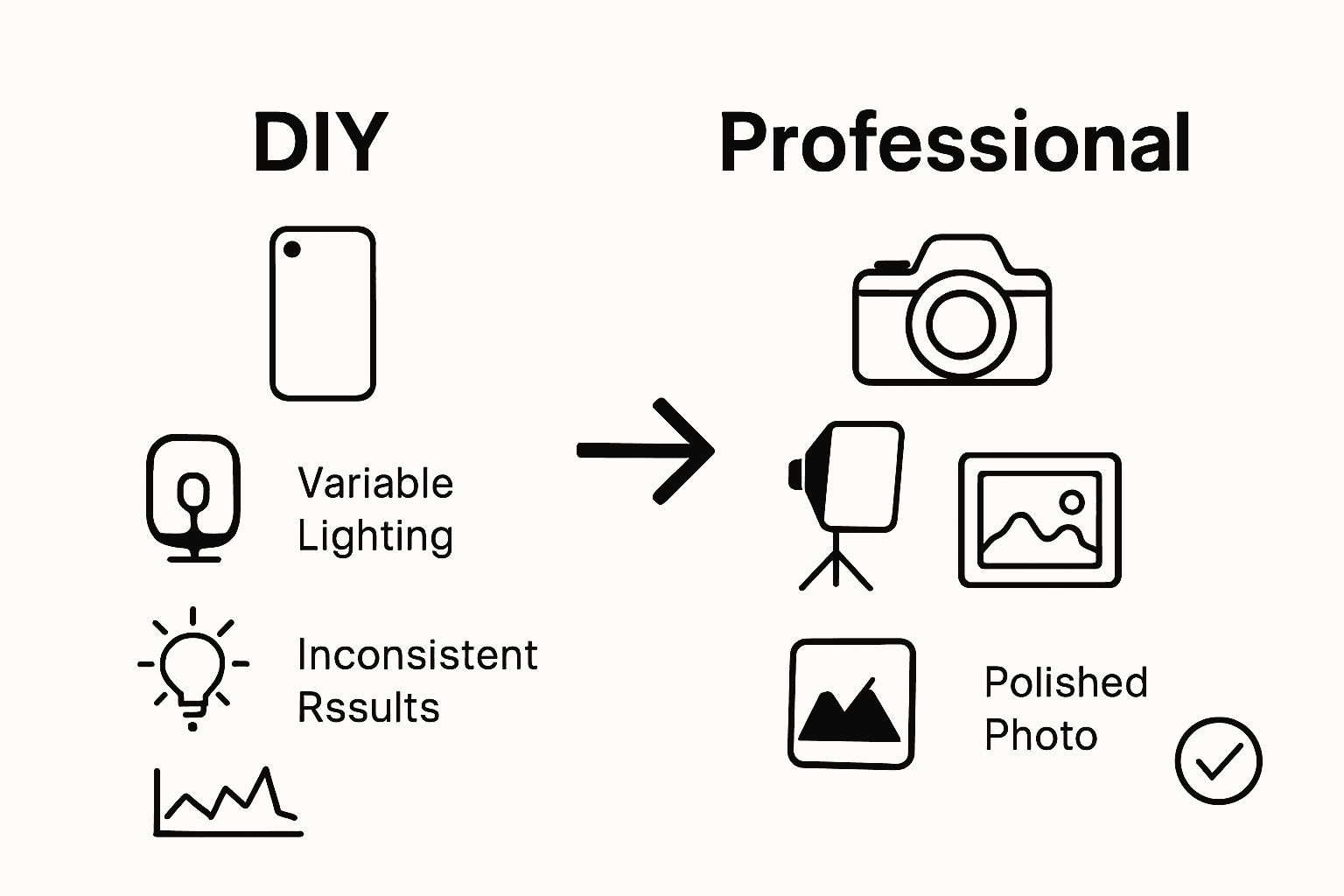
Compare the two main approaches to business photography:
| Aspect | DIY Photography | Professional Photography |
|---|---|---|
| Image Consistency | Often uneven and unpredictable | Cohesive and on-brand |
| Technical Skill | Basic camera operation | Advanced composition and lighting |
| Brand Messaging | Hard to control or maintain | Strategically directed with purpose |
| Post-Production | Limited editing capability | Expert retouching and enhancement |
| Business Perception | May appear amateurish | Projects credibility and expertise |
Pro Tip: Quality Assessment Strategy: Before commissioning a professional photographer, review their portfolio carefully, checking for consistency, technical excellence, and alignment with your brand’s visual aesthetic and marketing goals.
Legal Rights and Photo Usage for Businesses
Business photography involves complex legal considerations that extend far beyond simply capturing images. University brand standards emphasize the critical importance of understanding photography usage rights and legal compliance, highlighting the potential risks businesses face when mishandling visual content.
Key legal considerations for business photo usage include:
- Subject Consent: Obtaining explicit permission from individuals photographed
- Model Releases: Formal documentation granting rights to use personal images
- Copyright Protection: Understanding ownership and usage restrictions
- Commercial Use Permissions: Differentiating between personal and business image applications
- Intellectual Property Rights: Respecting photographer and subject ownership
Institutional photography guidelines provide comprehensive frameworks for navigating complex legal landscapes, demonstrating the nuanced legal requirements businesses must consider. Small businesses must be particularly careful about image usage, as unauthorized photography or improper representation can lead to potential legal challenges. This includes understanding the differences between editorial, commercial, and personal use of photographs, and ensuring proper licensing and permissions are secured before using any visual content.
Navigating the legal complexities of business photography requires proactive approach and careful documentation. Businesses should develop clear protocols for obtaining necessary permissions, maintaining detailed records of image usage rights, and establishing transparent communication with photographers and subjects. This not only protects the business legally but also builds trust and professionalism in visual marketing strategies.
Pro Tip: Permission Protocol: Always secure written model releases and usage agreements before publishing any photographs, clearly outlining the scope, duration, and specific purposes of image utilization.
Elevate Your Small Business with Professional Marketing Photos
Struggling to capture the true essence of your brand visually Let Jodi Blodgett Photography help you turn your vision into authentic, high-quality marketing photos that build trust and engage your local audience. Professional marketing photography goes beyond simple pictures by strategically showcasing your team, products, and workspace to create powerful emotional connections and establish your brand identity with clarity and consistency.

Ready to amplify your local impact with compelling visual storytelling Explore our Branding Photography | Jodi Blodgett Photography services designed specifically for business owners like you who want to stand out. Don’t miss the chance to elevate your marketing materials and differentiate your business with photos that speak to your customers. Visit Jodi Blodgett Photography now to book a session that transforms your brand presence and empowers your growth.
Frequently Asked Questions
What types of photos are essential for small business marketing?
To effectively market a small business, essential photo types include team portraits, product photography, workspace images, action shots, and detail images. Each type serves a specific purpose that aligns with the brand’s identity and enhances marketing efforts.
How can professional photography enhance my small business’s marketing strategy?
Professional photography can transform a business’s visual content by improving brand perception, enhancing marketing materials, generating customer engagement, differentiating from competitors, and effectively communicating brand narratives.
What should I include in my visual strategy for marketing photos?
Your visual strategy should include a shot list detailing essential perspectives such as team interactions, workspace environment, product highlights, and candid moments that reflect your company’s culture and spirit, ensuring a cohesive brand message.
Why is it important to hire a professional photographer instead of taking DIY photos?
Hiring a professional photographer ensures high technical quality, strategic positioning of images, expert post-production skills, and a cohesive visual style that effectively communicates your brand. DIY photography often lacks consistency and may not convey the desired professional image.