


TL;DR:
- A photography page should clearly specify service categories, session details, and contract terms to set accurate expectations. Reading contracts thoroughly ensures clarity on deliverables, usage rights, timelines, and copyright, preventing misunderstandings. Thorough preparation and communication contribute to smoother sessions and higher-quality images for families and individuals alike.
Before you fill out that contact form, the photography page you’re looking at is already telling you whether that photographer is the right fit. Most families miss it. They get distracted by pretty photos, overlook contract details, and have no idea what delivery timelines to expect. Whether you’re booking engagement portraits in New England, planning family photos around your toddler’s nap schedule, or investing in brand images for your small business, knowing how to read a photography page separates a great experience from a frustrating one. This guide gives you the framework to make a smart, confident decision.
Table of Contents
- Key takeaways
- Understanding what a photography page actually offers
- What to look for in contracts before you book
- Delivery timelines and what to expect after your session
- How to prepare for a photo session that actually goes smoothly
- My honest take on choosing the right photographer
- Ready to capture your next milestone with Jodiblodgettphotography?
- FAQ
Key takeaways
| Point | Details |
|---|---|
| Match your session type | Engagement, family, senior, and brand photography differ in session length, deliverables, and pricing. |
| Read contracts carefully | Look for specifics on deliverables, editing scope, timelines, and usage rights before signing. |
| Expect realistic delivery | Most full galleries arrive within 4 to 8 weeks; sneak peeks typically come within 24 to 72 hours. |
| Prepare intentionally | Coordinated colors, good timing, and comfort items transform a photo session from stressful to smooth. |
| Ask about licensing | Copyright stays with photographers unless explicitly transferred, so understand what you can do with your images. |
Understanding what a photography page actually offers
Not every photography page offers the same services, and confusing them leads to mismatched expectations fast. The four most common categories you’ll encounter are engagement, wedding, family portrait, and brand photography. Each one comes with different session dynamics, pricing, and deliverables.
Engagement photography focuses on two people, typically outdoors or in a location with personal meaning. Sessions usually run 60 to 90 minutes and are as much about building comfort with your photographer as they are about the photos themselves. Think of it as a warm-up before the wedding day.
Wedding photography is the most involved offering on any photo site. Coverage spans anywhere from 6 to 12 hours, includes multiple venues and lighting conditions, and requires significant post-processing time. It is also the highest-priced category, which is why the contract details matter most here.
Family portrait sessions are shorter, usually 45 to 90 minutes, and designed to capture natural interactions rather than rigid poses. Coordinated colors and planning around kids’ energy levels matter far more than perfect staging.
Brand photography is the outlier most people underestimate. These sessions go well beyond a headshot. Mini sessions start around $550 while full brand shoots can reach $2,300 or more in 2026, reflecting the planning, creative direction, and licensing considerations involved.
| Session Type | Typical Length | Pricing Range (2026) | Key Deliverable |
|---|---|---|---|
| Engagement | 60 to 90 min | $300 to $800 | 50 to 100 edited images |
| Wedding | 6 to 12 hours | $2,500 to $6,000+ | 400 to 800+ edited images |
| Family Portrait | 45 to 90 min | $250 to $600 | 30 to 75 edited images |
| Brand Photography | 2 to 4 hours | $550 to $2,300+ | 30 to 80 images, licensed usage |
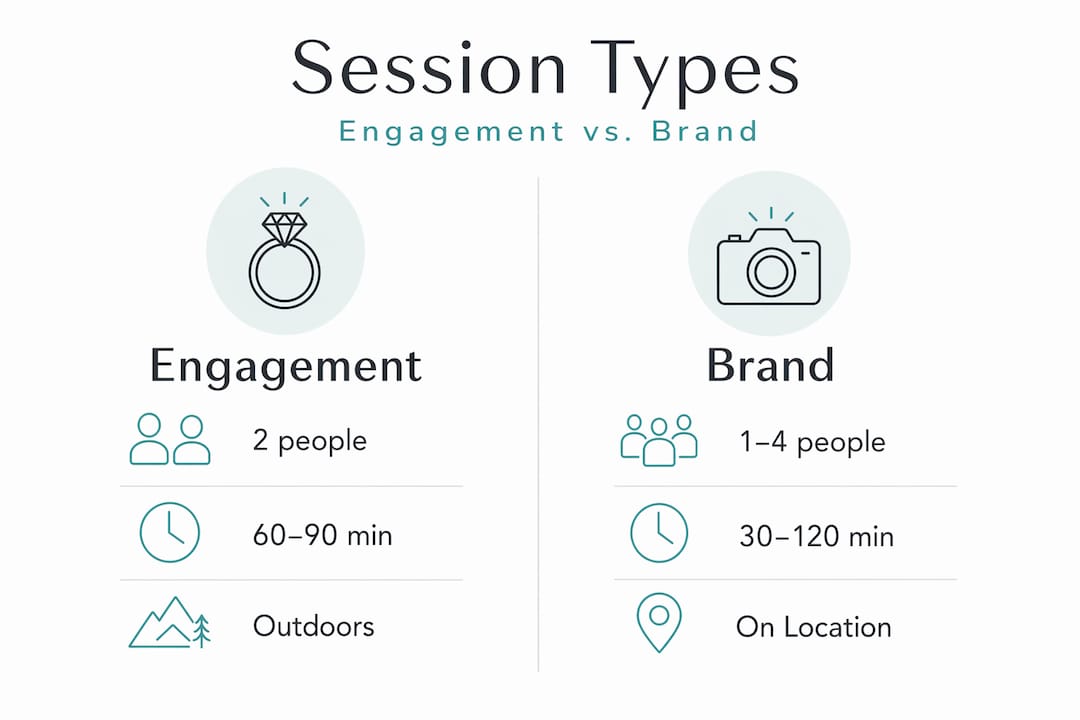
When you browse photography sites, look for pages that clearly describe which category each package belongs to. Vague listings like “custom session” without details on hours, image count, or included edits are a yellow flag.
Pro Tip: If a photography page doesn’t list what’s included in each package, that’s not a minimalist design choice. It’s missing information you need before you book. Always email and ask.
What to look for in contracts before you book
This section gets skipped more than any other. People see beautiful galleries, feel the vibe, and sign without reading. Then the surprises come. A clear contract is the most reliable sign that a photographer treats their business seriously and respects your time.

Wedding photography contracts must specify deliverables, editing scope, timelines, usage rights, coverage hours, and payment structure. That’s not a formality. Each of those items represents a potential disagreement if left undefined.
Here’s what to review on any photography page before you commit:
- Deliverables: How many final edited images are included? Are RAW files available, and at what cost?
- Editing scope: Does the photographer do basic color correction only, or full retouching? Know what “editing” means to them specifically.
- Timeline: When will you receive your gallery? What happens if the deadline isn’t met?
- Payment terms: What’s the deposit amount, and when is the remaining balance due?
- Cancellation policy: What do you lose if you cancel? What happens if the photographer cancels?
The copyright piece deserves special attention. Photographers retain copyright unless ownership is explicitly transferred in writing. What you typically receive is a personal use license, which means you can print and share the images but not resell or use them commercially without a separate agreement.
For anyone booking brand photography, licensing scope and creative planning should be finalized before the shoot, not after. Misunderstandings here can leave business owners unable to use images the way they planned.
If photos of identifiable people will be used in advertising or marketing, model releases are required to reduce legal risks. A photographer who asks you to sign one isn’t being difficult. They’re protecting both of you.
Specific contract language defining coverage hours, deliverables, and payment terms reduces misunderstandings and builds trust. Vague terms like “wedding photography coverage” are the most common source of client surprises.
Delivery timelines and what to expect after your session
You’ve had your session. Now the waiting begins. Understanding what a realistic timeline looks like prevents the anxiety that comes from checking your inbox every day for three weeks.
Most wedding photographers deliver full galleries within 4 to 8 weeks, with sneak-peek images arriving within 24 to 72 hours. That range shifts depending on the season. A photographer shooting 20 weddings between June and October has a very different editing schedule than one shooting in January.
Why does it take so long? It’s not just the editing. Photographers often build delivery buffers into their workflow to maintain consistent quality, manage large data sets, and avoid errors that come from rushing. A well-structured wedding day timeline actually helps photographers meet closer to 30-day commitments rather than the full 8-week outer limit.
Here’s how to communicate well during the wait:
- Confirm the delivery timeline in writing before the session, not after.
- Ask whether you’ll receive a sneak peek and how many images it will include.
- If your contract includes a deadline and it passes, follow up professionally with a written message referencing that deadline.
- For family or engagement sessions, expect shorter turnarounds, typically 1 to 3 weeks.
Patience pays off here. Rushed editing shows up in the final gallery, and no one wants that trade-off.
How to prepare for a photo session that actually goes smoothly
Most people underestimate how much their own preparation affects the final photos. The best photography page in the world can’t fix a session where everyone showed up stressed, mismatched, and running on no sleep. Here’s how to set yourself up for success.
Coordinate your outfits, don’t match them. Choose a color palette of 2 to 3 complementary tones and let each person express their style within it. Coordinated palettes and avoiding exact matching create a visually cohesive look without making your family look like a uniform.
Time the session around your family’s energy. For families with young kids, late morning is often the sweet spot. Avoid scheduling right before nap time or after a long car ride. For seniors and couples, golden hour light (roughly an hour before sunset) is flattering and easier to work with.
Bring comfort items. Snacks, a favorite stuffed animal, a blanket for babies, even a playlist your toddler loves. Comfort items and planning around kids’ needs reduce meltdowns and create genuine smiles rather than forced ones.
Build a simple shot list. You don’t need to direct the session, but sharing 5 to 10 must-have moments or groupings with your photographer before the day helps both of you. Candid interactions between grandparents and grandkids, a specific location, a family tradition you want captured.
Talk to your photographer beforehand. A short call or email exchange about your goals, any concerns, or what matters most to you gives the photographer context that changes how they shoot. The best results always come from sessions where the photographer understands the story they’re telling.
Pro Tip: Arrive 10 minutes early to every session. It gives kids time to settle, lets everyone get comfortable with the location, and removes the rushed energy that shows up in the first 15 photos.
My honest take on choosing the right photographer
I’ve reviewed dozens of photography sites over the years, and the thing that separates a good experience from a regrettable one almost never comes down to the photos themselves. It comes down to communication.
What I’ve noticed is that most families focus entirely on the gallery and almost nothing on the contract. Then when delivery takes longer than expected, or they realize they can’t use an image in a certain way, they feel blindsided. That frustration is preventable every single time.
My take: a photographer who has a clear, detailed page, a well-written contract, and responsive communication before you’ve even paid a deposit is showing you exactly how they’ll operate throughout the whole experience. The wedding photography workflow matters as much as the art.
I also think people undervalue session preparation. I’ve watched families arrive flustered, skip the outfits conversation, and wonder why the photos felt stiff. The ones who spend 30 minutes preparing beforehand get an entirely different gallery. Preparation doesn’t just improve logistics. It changes the emotional quality of every single frame.
Budget matters, and I won’t pretend otherwise. But the photographers who price at the lower end of the market and have no clear contract, no communication system, and no defined workflow are a much more expensive mistake in the long run.
— Andrew
Ready to capture your next milestone with Jodiblodgettphotography?
If this article helped you understand what to look for on a photography page, Jodiblodgettphotography is built around exactly these principles. Every service comes with clear packages, defined timelines, and a photographer who communicates every step of the way.

Whether you’re starting with engagement photos before the big day, booking senior portraits, or looking into brand lifestyle photography for your local business, Jodiblodgettphotography serves families and individuals across Massachusetts, Connecticut, and Rhode Island with natural light and emotional storytelling at the core. You can also explore the family session guide for detailed preparation tips before you book. Reach out through the site to start a conversation. No pressure, just clarity on next steps.
FAQ
What should a photography page include before I book?
A photography page should clearly list service types, session lengths, pricing ranges, deliverables, and contract highlights. If any of those are missing, contact the photographer directly before proceeding.
How long does it take to receive photos after a session?
Full wedding galleries typically arrive in 4 to 8 weeks, while engagement and family session galleries usually take 1 to 3 weeks. Sneak peeks often come within 24 to 72 hours.
Do photographers own the photos after a session?
Yes. Photographers retain copyright unless they explicitly transfer ownership in writing. Clients receive a personal use license, which covers printing and sharing but not commercial use.
How far in advance should I book a photographer?
For weddings, 80% of couples book 12 or more months early, particularly for popular summer and fall dates. Family and engagement sessions can often be booked 4 to 8 weeks out.
What is the most important thing to do before a family photo session?
Coordinate outfits and bring comfort items for young children. Scheduling around your kids’ natural energy levels has a bigger impact on the final photos than almost anything else.
Recommended
- When to Book Your Photographer: A Step-by-Step Guide | Jodi Blodgett Photography
- Booking a photography session: family guide to moments | Jodi Blodgett Photography
- Family photographer FAQs: make every moment count | Jodi Blodgett Photography
- How to Book a Photo Session: Step-by-Step Success Guide | Jodi Blodgett Photography