


Photographers everywhere chase that fleeting glow right after sunrise and just before sunset because the golden hour turns even the most common scene into a picture worth framing. Hold on. This magic window only lasts about 20 to 30 minutes each day and the light actually changes your mood, not just the photo. Most are focused on the warm colors and soft shadows but the real surprise is how golden hour light can spark powerful emotional responses in both viewers and subjects alike. What is golden hour photography? Keep reading to find out.
Table of Contents: What is Golden Hour Photography
- The Concept Of Golden Hour In Photography
- Why Golden Hour Matters For Photographers
- How Golden Hour Affects Light And Mood
- Key Elements Of Successful Golden Hour Photography
Quick Summary
| Takeaway | Explanation |
|---|---|
| Golden hour offers ideal lighting for photography. | The soft, warm light during this time enhances images, reducing harsh shadows and creating flattering conditions for subjects. |
| Technical preparation is crucial for golden hour. | Using a sturdy tripod, wide-angle lens, and extra batteries ensures photographers capture the moment’s fleeting beauty effectively. |
| Understand the emotional impact of golden hour light. | Golden hour’s unique warmth affects mood, creating calmness and emotional resonance within captured images. |
| Composition techniques can enhance golden hour photography. | Utilizing long shadows and warm gradients allows photographers to tell richer visual stories during this transformative time. |
| Golden hour is versatile across various photography genres. | This time can elevate landscape, portrait, wedding, and architectural photography with its exceptional lighting and emotional depth. |
The Concept of Golden Hour in Photography
Golden hour photography represents a magical moment in natural lighting that transforms ordinary scenes into extraordinary visual narratives. This unique time period occurs shortly after sunrise and before sunset, when sunlight becomes softer, warmer, and more diffused, creating breathtaking photographic opportunities.
Understanding the Golden Hour Phenomenon
The golden hour is characterized by its distinctive lighting qualities that occur when the sun sits low on the horizon. During this brief window typically lasting 20 to 30 minutes, sunlight travels through more atmospheric layers, which dramatically alters its color temperature and quality. According to National Film Institute, this period creates a warm, golden tone that bathes landscapes, subjects, and scenes in an incredibly soft and flattering light.
To help you quickly identify the defining qualities of golden hour light, the table below summarizes its key characteristics and their effects on photography.
| Characteristic | Description | Effect on Photography |
|---|---|---|
| Warm Color Temperature | Sunlight appears orange to reddish | Enhances natural skin tones and hues |
| Soft, Diffused Illumination | Light disperses through more atmosphere | Minimizes harsh shadows and bright highlights |
| Long, Dramatic Shadows | Low sun angle projects extended shadows | Adds depth, dimension, and visual interest |
| Reduced Contrast | Lower intensity difference between light and dark areas | Enables better exposure and detail balance |
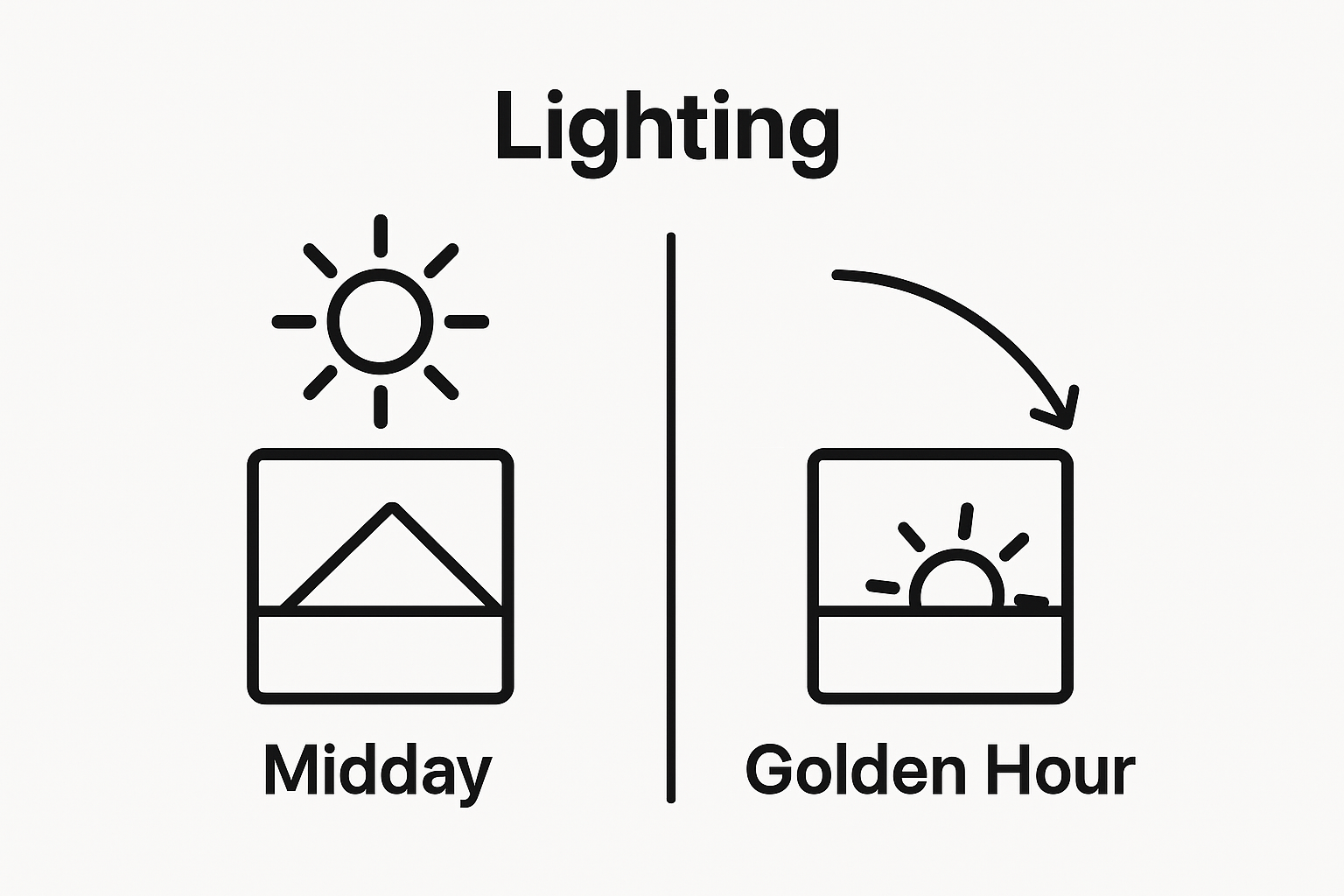
Key characteristics of golden hour light include:
- Warm, orange to reddish color temperatures
- Soft, diffused illumination with minimal harsh shadows
- Long, dramatic shadows that add depth and dimension
- Reduced contrast between highlights and shadows
Why Photographers Love the Golden Hour
Professional photographers prize the golden hour for its unparalleled aesthetic qualities. The low-angle sunlight creates a natural softbox effect, gently illuminating subjects without the harsh, direct light found during midday. This lighting technique reduces unflattering facial shadows, minimizes squinting, and adds a warm, ethereal glow to portraits, landscapes, and architectural photography.
The golden hour’s unique lighting properties allow photographers to capture images with exceptional depth, texture, and emotional resonance. By leveraging these natural light conditions, photographers can transform ordinary scenes into extraordinary visual stories that evoke powerful emotional responses.
Why Golden Hour Matters for Photographers
Photographers consistently seek optimal lighting conditions that transform ordinary scenes into extraordinary visual narratives. The golden hour emerges as a pivotal moment that offers unparalleled aesthetic opportunities across multiple photographic genres, creating images with exceptional emotional depth and visual richness.
Aesthetic and Technical Advantages
The golden hour provides photographers with unique technical advantages that elevate image quality and emotional impact. According to the New York Institute of Photography, this brief window offers photographers several critical benefits:
- Soft, diffused light that minimizes harsh shadows
- Warm color temperatures enhancing natural skin tones
- Reduced contrast enabling better exposure balance
- Natural rim lighting that creates depth and dimension
These technical qualities make golden hour lighting particularly attractive for professional photographers seeking to create visually compelling and emotionally resonant images. The low angle of sunlight produces long, dramatic shadows that add depth and texture to photographs, transforming mundane scenes into extraordinary visual stories.
Versatility Across Photographic Genres
Golden hour photography transcends specific genres, offering remarkable opportunities for landscape, portrait, wedding, and architectural photography. During this magical timeframe, photographers can capture scenes with an ethereal quality impossible to replicate under standard lighting conditions. The warm, soft light naturally highlights textures, softens harsh edges, and creates a luminous atmosphere that adds emotional depth to visual narratives.
Whether capturing a serene landscape, an intimate wedding portrait, or an architectural masterpiece, golden hour light provides photographers with a natural, sophisticated lighting solution that elevates their creative vision. The unique interplay of warm tones, soft shadows, and gentle illumination enables photographers to craft images that resonate deeply with viewers, transforming ordinary moments into extraordinary memories.

How Golden Hour Affects Light and Mood
Light is not just a visual phenomenon but a profound psychological experience that significantly influences human perception and emotional states. The golden hour represents a unique atmospheric condition where sunlight transforms from a mere environmental element into a powerful emotional catalyst, creating extraordinary sensory and psychological experiences.
The Psychological Science of Warm Light
The golden hour’s distinctive lighting conditions do more than enhance visual aesthetics they fundamentally alter our emotional landscape. According to psychological research, the warm, soft light during this period triggers complex neurological responses that can profoundly impact mood and perception.
Key psychological responses to golden hour light include:
- Increased production of mood-regulating neurotransmitters
- Reduction of stress hormones like cortisol
- Enhanced feelings of calmness and emotional warmth
- Improved sense of spatial and temporal perception
Neurological and Emotional Resonance
The golden hour’s light quality creates a unique sensory experience that goes beyond mere visual perception. Its soft, diffused warmth mimics the comforting qualities of firelight and sunset, triggering deep-seated evolutionary responses associated with safety, rest, and emotional connection.
This natural phenomenon activates our parasympathetic nervous system, encouraging relaxation and emotional openness. The gentle, enveloping light creates a sense of tranquility that can lower psychological barriers, making individuals more receptive to emotional experiences and interpersonal connections. Photographers intuitively understand this quality, leveraging golden hour’s transformative light to capture moments of profound human vulnerability and beauty.

Key Elements of Successful Golden Hour Photography
Successful golden hour photography requires more than just being present during the magical lighting window. It demands a strategic approach that combines technical preparation, creative vision, and an understanding of environmental dynamics that make this brief moment extraordinary.
Technical Preparation and Equipment
Photographers must approach golden hour shooting with intentional technical readiness. According to Photo Guides, critical equipment preparation involves selecting the right gear to maximize this fleeting opportunity:
- Sturdy tripod for stabilizing shots in low light
- Wide-angle lens to capture expansive scenes
- Neutral density filters for balanced exposure
- Remote shutter release to minimize camera movement
- Extra batteries and memory cards
The right equipment allows photographers to quickly adapt to changing light conditions and capture the ephemeral beauty of golden hour with precision and creativity. Understanding your gear becomes as crucial as understanding the light itself.
The following table organizes the most important equipment and its role in successful golden hour photography, making technical preparation simple and accessible for all skill levels.
| Equipment | Purpose/Benefit |
|---|---|
| Sturdy Tripod | Stabilizes shots in low-light conditions for sharper images |
| Wide-angle Lens | Captures expansive landscapes and immersive scenes |
| Neutral Density Filters | Helps achieve balanced exposures with bright skies |
| Remote Shutter Release | Minimizes camera shake, allowing precise and clear captures |
| Extra Batteries | Ensures enough power as longer exposures can drain batteries quickly |
| Memory Cards | Provides ample storage for multiple high-resolution golden hour images |
Compositional Strategies and Creative Vision
Beyond technical preparation, golden hour photography demands a nuanced approach to composition. The low-angle sunlight creates dramatic shadows, warm color gradients, and unique textural opportunities that require photographers to reimagine traditional framing techniques.
Successful golden hour images emerge from a combination of careful planning and spontaneous creativity. Photographers must anticipate how sunlight will interact with landscapes, subjects, and environmental elements, using long shadows, rim lighting, and warm color temperatures to transform ordinary scenes into extraordinary visual narratives. The key lies in seeing beyond the immediate scene and understanding how light becomes the primary storytelling element.
Capture the Golden Hour Magic in Your Own Story
The article reveals how golden hour transforms ordinary moments into breathtaking images through warm, soft light and emotional resonance. If you are longing for photos that truly capture life’s most meaningful moments with that enchanting golden glow but struggle to achieve those results on your own, let Jodi Blodgett Photography help you experience what you have been missing. Our approach is grounded in the same natural light storytelling highlighted in “What is Golden Hour Photography? Understanding Its Magic” and is designed to make you feel confident and comfortable in front of the camera, whether it is a family session, engagement, or a personal milestone.

Bring your vision to life with a seasoned photographer who understands how to harness golden hour beauty for genuinely memorable portraits. Explore the portfolio gallery for real examples of golden hour moments. Ready to book or have questions? Visit Jodi Blodgett Photography now and secure your golden hour session before the light fades. This limited window only happens twice a day, so reserve your spot today to capture your memories in their most magical light.
Frequently Asked Questions
What is the golden hour in photography?
The golden hour in photography refers to the unique time shortly after sunrise and before sunset when sunlight is softer, warmer, and more diffused, creating ideal conditions for capturing stunning photographs.
Why is golden hour important for photographers?
Golden hour is significant for photographers because it provides beautiful, warm lighting that enhances colors and reduces harsh shadows, allowing for captivating and emotionally resonant images across various photography genres.
How long does golden hour last?
Golden hour typically lasts between 20 to 30 minutes, depending on geographical location and atmospheric conditions, making it essential for photographers to plan their shoots accordingly.
What equipment should I use for golden hour photography?
When shooting during golden hour, it’s essential to have a sturdy tripod, a wide-angle lens, neutral density filters for balanced exposure, and extra batteries and memory cards to capture the fleeting beauty of the moment.