

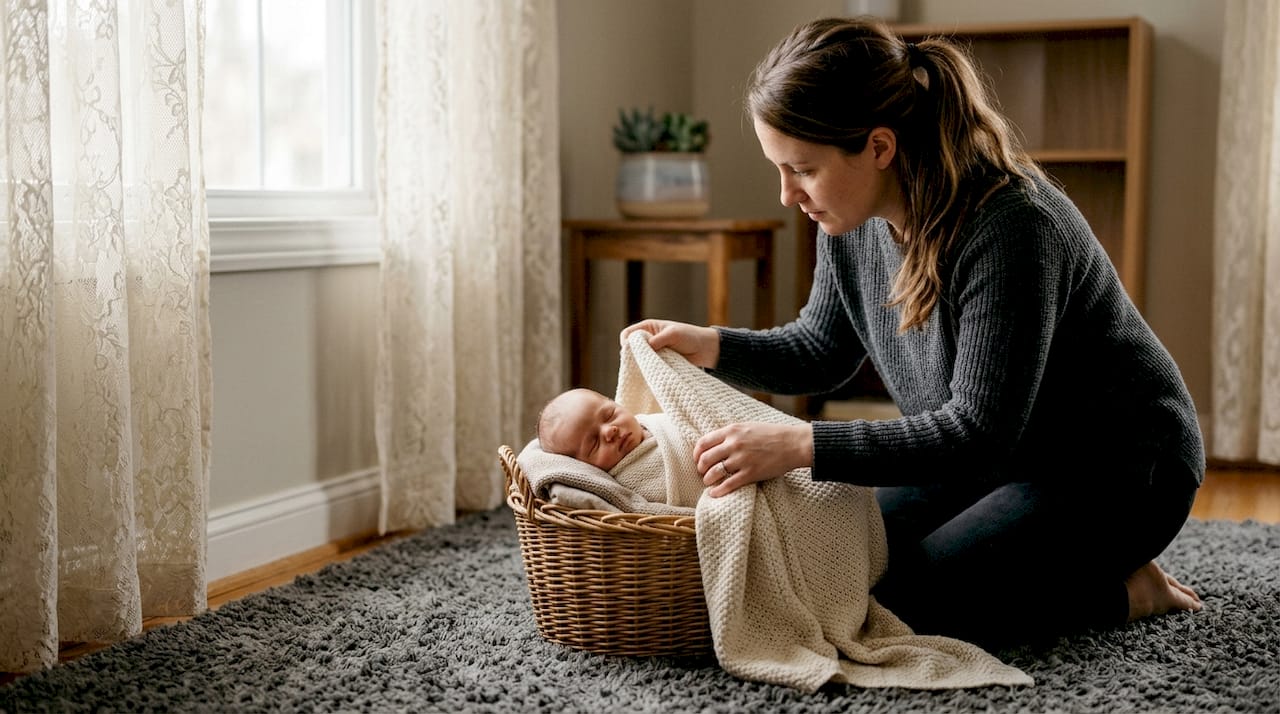
TL;DR:
- Safe and simple newborn poses, such as the back, side-lying, and swaddled positions, are the most reliable and natural options. Professional photographers use controlled environments, soft surfaces, and composite editing for complex poses like the froggy, ensuring safety and comfort. Including parents in photos creates warm, emotional images, while proper lighting and room temperature enhance the overall session quality.
Poses for newborn photos are carefully chosen positions that keep your baby safe and comfortable while capturing their delicate features and the emotional bond your family shares. Professional photographers call this practice “newborn posing,” and it combines technical skill with genuine care for the infant’s wellbeing. The best newborn photography poses rely on soft surfaces, controlled environments, and a spotter when needed. Photographers like Jennifer Imus and Karolina Talaga have built entire careers around the principle that simplicity produces the most timeless results. This guide gives you the foundational knowledge to approach your session with confidence.
1. What are the safest and simplest poses for newborn photos?
The three foundational newborn poses are the back pose, the side-lying pose, and the swaddled pose. These positions are safe, easy, and natural for babies to hold, making them the best starting point for any session.
- Back pose (supine). Lay your baby flat on their back on a soft blanket or beanbag. This position shows off your baby’s full face, tiny fingers, and natural body proportions. Shoot from directly above for a clean, classic look.
- Side-lying pose. Place your baby on their side with legs gently tucked toward the chest. This position mimics the curl of the womb and tends to feel instinctively comfortable for newborns in their first two weeks.
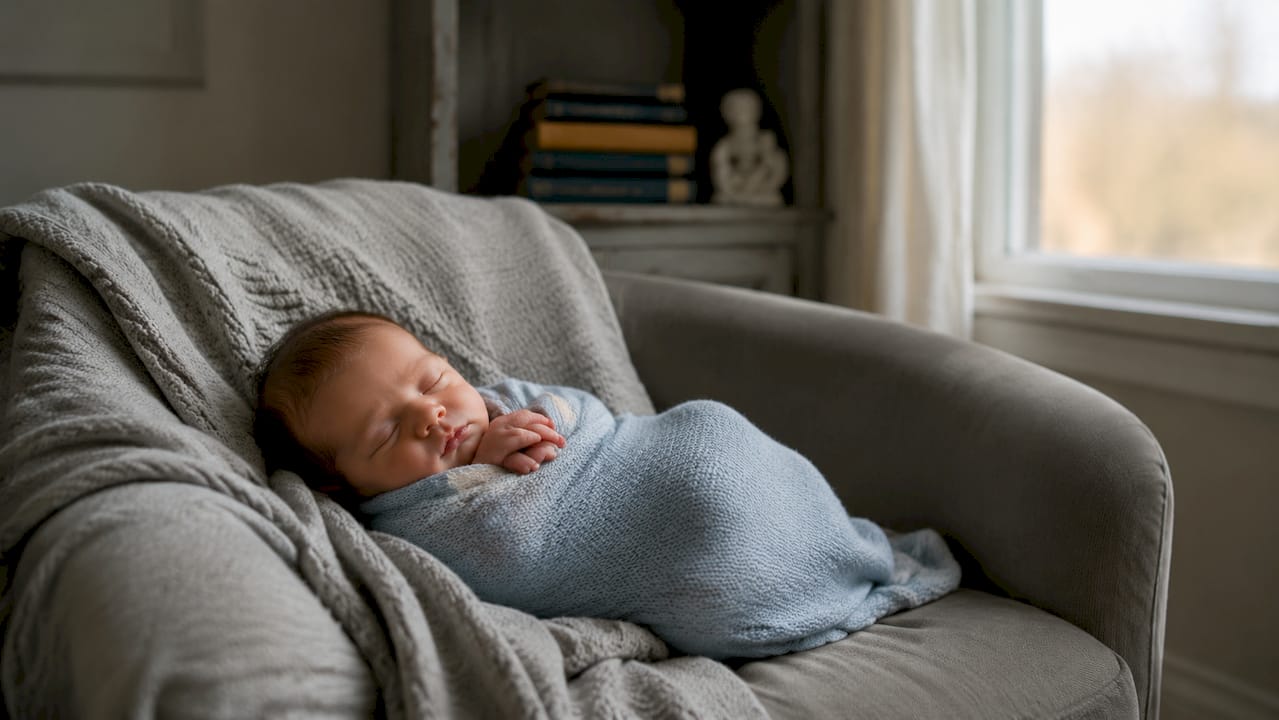
- Swaddled pose. Wrap your baby snugly in a soft muslin or stretchy wrap. Swaddling calms fussy babies by recreating the pressure of the womb. A tightly swaddled baby is also easier to move and reposition without waking them.
Each of these positions works beautifully with simple props like a soft knit blanket, a neutral wrap, or a wooden crate lined with padding. Keep the setup minimal. A clean, uncluttered background keeps the viewer’s eye on your baby.
Pro Tip: Warm the room to around 80°F before the session. A warm environment mimics womb temperature, keeps your baby sleepy, and reduces fussiness during posing.
2. How to use props safely without putting your baby at risk
Props add visual interest to newborn photos, but they must never bear your baby’s weight on their own. All newborn weight must rest on a stable posing surface or secure hands at all times.
The most reliable posing surface is a large, vinyl-covered beanbag. Beanbags conform to the baby’s shape and reduce pressure points, making them the industry standard for newborn sessions. Baskets, wooden bowls, and crates work as decorative frames around the baby, not as structural support. Experienced photographers weight these props discreetly underneath to prevent tipping.
“Props are set dressing, not baby furniture. The beanbag does the real work. Everything else is there to make the photo look beautiful.” This distinction matters because parents who attempt prop poses at home sometimes skip the safety steps that professionals treat as non-negotiable.
- Line every prop with thick padding before placing your baby inside.
- Keep one hand on your baby at all times when transferring between surfaces.
- Never leave a propped baby unattended, even for a second.
- Use a spotter for any pose where your baby’s position feels even slightly unstable.
Pro Tip: Always disclose composite images when sharing them online. Other parents may attempt to recreate what they see, and transparency prevents unsafe imitation.
3. What is the froggy pose and why does it require composite editing?
The froggy pose is one of the most requested newborn photography ideas, and it is also one of the most misunderstood. In this pose, the baby appears to rest their chin on their folded hands with elbows propped forward. It looks effortless. The reality is more technical.
Professional safety standards require that the froggy pose always be a composite image. A spotter supports the baby’s head and body throughout the entire shoot. The photographer takes multiple frames with the spotter’s hands in different positions, then digitally removes those hands in post-editing. The final image is a blend of two or more shots. Composite images demand multiple shots and advanced editing skill, which is why this pose belongs exclusively in the hands of trained professionals.
A baby’s neck muscles cannot support their own head in the first weeks of life. Any pose that appears to require that support is either a composite or unsafe. Parents should never attempt the froggy pose at home without professional guidance and a trained spotter present.
4. Creative poses that capture the parent-infant connection
Parent-inclusive poses produce some of the most emotionally powerful newborn photos. These shots require no special equipment and carry a natural warmth that purely baby-focused images sometimes lack.
- Chest cradle. A parent holds the baby against their bare chest, skin to skin. Shoot from above or at a slight angle. The size contrast between parent and newborn tells the whole story in one frame.
- Over-the-shoulder. One parent holds the baby over their shoulder while the other parent leans in close. This creates a natural family triangle and works well for a first family portrait.
- Hand close-up. A parent cups the baby’s entire body in two open hands. This shot highlights the baby’s tiny scale and works beautifully in black and white.
- Forehead kiss. A parent brings their lips to the baby’s forehead while the baby sleeps. This is one of the most requested shots at Jodi Blodgett Photography sessions because it captures pure, unscripted emotion.
Forcing a pose when a baby resists is counterproductive. If your baby fusses during a specific position, shift to a parent-inclusive pose instead. These shots are more forgiving because the parent’s body provides natural support and warmth.
Pro Tip: Position your session near a large window and shoot in the morning. Soft, directional natural light flatters skin tones and creates a gentle, timeless mood without any artificial setup.
5. How lighting and temperature shape your newborn session
Lighting and temperature are as important as posing for natural, stress-free newborn photography. Getting these two elements right before the session starts prevents most of the common problems parents encounter.
- Set the room temperature to 80°F. Warm rooms mimic womb warmth and reduce fussiness during handling. A cold room wakes babies up and shortens your posing window significantly.
- Use a large north-facing window. North-facing windows provide consistent, diffused light throughout the day. This avoids the harsh shadows that direct sunlight creates on a baby’s delicate skin.
- Avoid camera flash. Flash photography can startle newborns and disrupt their sleep. Soft window light and warm rooms produce calmer babies and better images than any artificial lighting setup.
- Keep backdrops simple. Neutral tones like cream, gray, and soft sage keep the viewer’s attention on the baby. Busy patterns compete with the subject and date the photos quickly.
- Dim overhead lights. Overhead lighting creates unflattering shadows under the eyes and chin. Turn off ceiling lights and rely entirely on window light for the most natural results.
Pro Tip: Check the best time of day for photos before scheduling your session. Morning light is softer and more consistent than afternoon sun, which shifts quickly and can create uneven exposures.
6. Newborn pose comparison: ease, safety, and visual effect
| Pose | Safety level | Ease for beginners | Visual effect | Best prop or setting |
|---|---|---|---|---|
| Back pose (supine) | Highest | Very easy | Classic, full-feature view | Soft blanket on flat surface |
| Side-lying | High | Easy | Womb-curl, intimate | Beanbag with wrap |
| Swaddled | Highest | Very easy | Calm, cozy, timeless | Muslin or stretchy wrap |
| Parent chest cradle | High | Easy | Emotional, scale contrast | Natural window light |
| Froggy pose | Requires professional | Advanced only | Striking, editorial | Composite editing required |
| Basket or bowl | High with spotter | Moderate | Rustic, lifestyle | Padded, weighted prop |
The back pose and swaddled pose are the best starting points for parents working with a photographer for the first time. The froggy pose should never appear on a beginner’s shot list. Use this table to set realistic expectations before your session and communicate your preferences clearly with your photographer.
Key takeaways
The safest and most memorable newborn photos come from simple poses, controlled environments, and a photographer who prioritizes your baby’s comfort above all else.
| Point | Details |
|---|---|
| Safety comes first | Never attempt composite poses like the froggy pose without a trained professional and spotter. |
| Simple poses work best | Back, side-lying, and swaddled poses are the most reliable and timeless options for beginners. |
| Props are decorative only | All baby weight must rest on a beanbag or stable surface, never on a prop alone. |
| Temperature matters | Keep the room at 80°F to mimic womb warmth and keep your baby calm and sleepy. |
| Natural light wins | Soft window light produces the most flattering, stress-free results without disturbing the baby. |
What I’ve learned from watching parents in the studio
The parents who walk away with their favorite photos are almost never the ones who came in with a long Pinterest list. They are the ones who let the session breathe.
I have watched parents arrive with printed mood boards, specific prop requests, and a ranked list of poses. By the third pose, the baby is fussing, the parent is tense, and the whole session shifts into damage control. The images that end up on the wall are almost always the unplanned ones. A baby yawning mid-pose. A parent laughing when the wrap falls loose. A quiet moment between a father and his newborn that nobody planned for.
Adjusting to your baby’s mood is not a compromise. It is the actual skill. A photographer who insists on a specific pose when your baby is clearly uncomfortable is prioritizing the shot list over your child. That is backwards. The best sessions follow the baby’s lead and capture what is actually happening, not what was planned.
My honest advice: bring two or three poses you love and hold them loosely. Tell your photographer what matters most to you emotionally, not aesthetically. The technical side is their job. Your job is to be present. The photos will reflect exactly that.
Professional newborn photography in Massachusetts, Connecticut, and Rhode Island
Jodi Blodgett Photography specializes in safe, natural newborn and family portrait sessions across Massachusetts, Connecticut, and Rhode Island. Every session is built around your baby’s comfort, with posing decisions made in real time based on how your newborn responds on the day.

Jodi brings years of experience with milestone photography sessions that prioritize genuine connection over complex setups. Whether you want classic swaddled portraits or emotional parent-and-baby moments, the approach stays the same: your baby’s safety first, your family’s story second, the technical details handled completely. Ready to book or ask a question? Send a session inquiry and Jodi will get back to you with availability and session details.
FAQ
What is the safest newborn pose for beginners?
The back pose (supine) is the safest and easiest newborn pose for beginners. It requires only a soft, flat surface and captures the baby’s full face and natural features without any complex positioning.
When is the best time to schedule a newborn photo session?
The optimal window for newborn photography is within the first 5–14 days of life. Babies in this window sleep deeply, curl naturally, and are flexible enough for gentle posing.
Is the froggy pose safe for newborns?
The froggy pose is safe only when performed by a trained professional using composite photography. A spotter supports the baby throughout the shoot, and the supporting hands are removed digitally in post-editing.
What room temperature is best for a newborn photo session?
Keep the room at approximately 80°F during the session. This temperature mimics womb warmth, reduces fussiness, and helps your baby stay sleepy and relaxed during posing.
Can parents be included in newborn photos?
Parent-inclusive poses like the chest cradle, forehead kiss, and hand close-up are some of the most requested and emotionally powerful shots in newborn photography. They require no special equipment and produce naturally warm, authentic images.